
Pack the fun. Bring the plan.
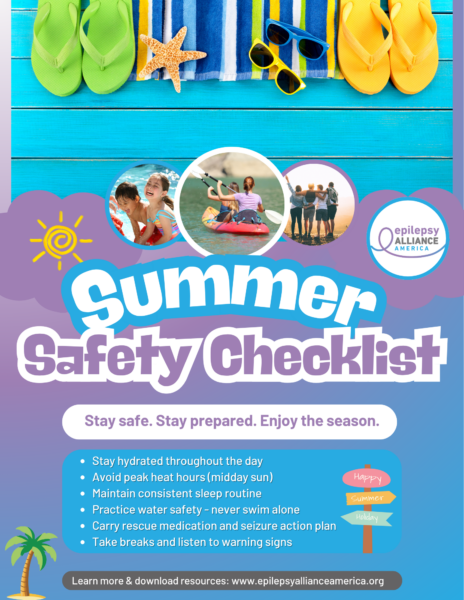
Changes in the seasons can provide unique challenges to people with epilepsy. Seizure patterns can be affected by heat, dehydration and changes in daily routines. With longer days of sunlight, it is tempting to stay up later and rise earlier. Remember that changes to sleep schedules can be a seizure trigger.
Traveling? Check out our travel tips.
Planning to swim or participate in water sports? Learn how to do so safely.
Have a child with epilepsy that wants to attend summer camp? Get some peace of mind here.
Need to create or update your Seizure Action Plan? Get your free template here.

- Never swim alone; always swim with a buddy who knows your seizure history and is prepared to respond in the event of a seizure
- Choose lifeguard-supervised areas when possible
- Wear a life jacket for boating and water sports
- Avoid swimming when tired or unwell
Find other safety tips for swimming and water activities here.
Heat & Warm Weather Safety

Hot temperatures can increase seizure risk, especially if your body becomes overheated or dehydrated. Dehydration happens when you lose more water than you take in during activity. As you participate in activities and hikes, you lose water through sweat. Drink lots of water before you start to feel thirsty. This will help prevent your water level from dropping too low. Losing more water than you take in can contribute to seizure activity, so resting and hydrating is important.
Tips to stay cool:
- Take breaks in shaded or air-conditioned areas
- Avoid outdoor activity during the hottest part of the day
- Wear lightweight, breathable clothing
- Consider cooling tools like neck wraps or cooling vests
- Watch how your body responds to heat and adjust as needed
- Some medications can reduce sweating or increase sun sensitivity
- Store medications according to instructions and avoid exposure to extreme heat
- Carry extra medication when traveling or spending long periods outdoors
- Talk to your healthcare provider about how heat may affect your medication
Sun Safety

Sun exposure and high temperatures can affect how your body feels and functions.
- Applying sunscreen daily (even on cloudy days)
- Wearing sunglasses or protective eyewear, such as polarized, blue tinted if you have photosensitive seizures
- Spending time in shaded areas when possible
- Wearing light-colored, breathable clothing
Travel & Planning Ahead

Summer often means travel, new routines, and new environments. With longer days of sunlight, it is tempting to stay up later and rise earlier. Remember that changes to sleep schedules can be a seizure trigger. Planning ahead can help you stay safe and confident.
Before you go:
- Talk with your doctor to create a plan
- Pack extra medication and rescue treatment
- Consider any time zone changes and, with your doctor, plan for how that may affect medication timing
- Bring a copy of your seizure action plan
- Share emergency information with travel companions
- Identify nearby healthcare facilities if traveling to a new area
Summer should be a time for fun, connection, and new experiences. With the right preparation and awareness, people living with epilepsy can enjoy the season safely and confidently.